
Voice of the Customer ·
When customer stories feel flat, it's a business problem
Why a company-wide Voice of the Customer program comes before advocacy.
I recently talked with a smart CMO who understands her business and customers deeply.
She told me she’d been talking with customers to source compelling customer stories, but the customer stories were not exciting. Customers use the product, and everything is fine, but that’s about it. She wasn’t finding anybody worth putting on stage.
Then she asked me how I would solve this problem.
I was quick to say this is not an advocacy problem. This is a business problem.
If your customers aren’t excited about what they’re buying or speaking about real value, watch out.
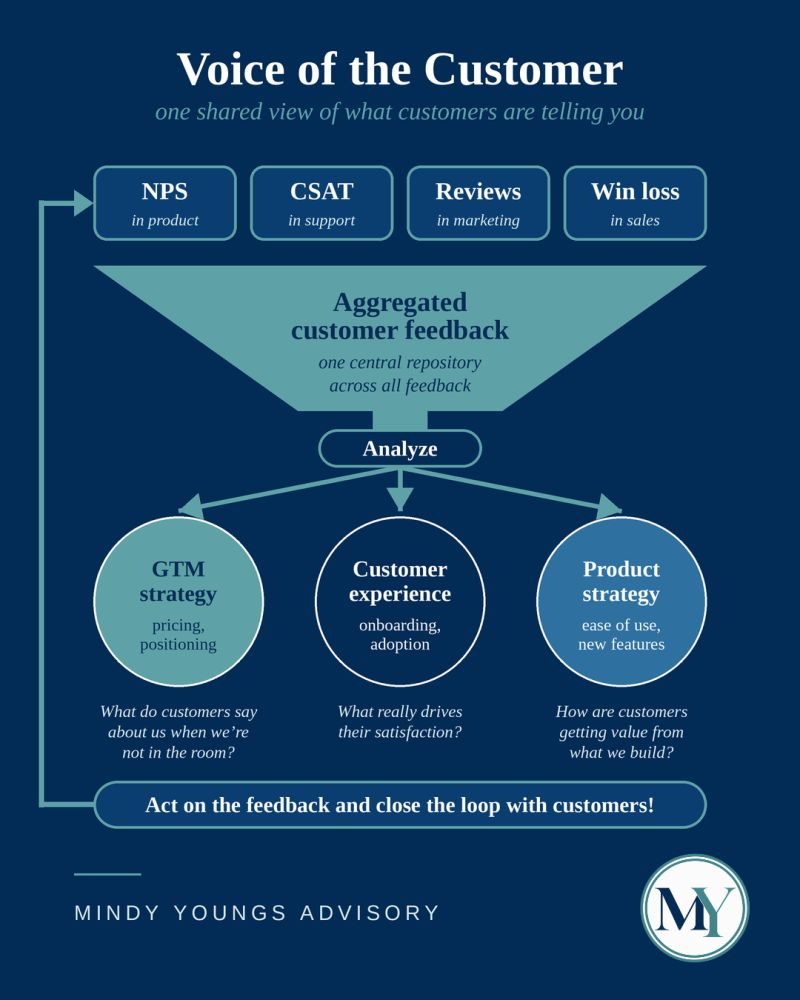
My advice was to start with listening. Customer feedback is already telling you what to fix, and it usually falls into three buckets:
- Go to market: pricing, positioning, messaging, etc.
- Product: new features, ease of use, stability, etc.
- Customer experience: onboarding, adoption, support, etc.
But at most companies that feedback lives in silos. CSAT sits in support. Reviews sit in marketing. Win loss sits in sales. NPS sits in product. And so on… Every team does its own version of listening, even though most of the work is the same, and nobody sees the whole picture.
So leaders find out about problems after they’ve become big ones.
A company wide Voice of the Customer program changes that. Pull the feedback together as one central repository across all feedback, analyze the feedback, act on it, and then close the loop with customers.
Then two things happen:
- Your happy customers feed your advocacy program and incredible stories find you.
- And your unhappy ones show you what to fix first. Fix it, and negative sentiment turns positive. Increase in positive sentiment drives business outcomes and creates advocates with stories worth telling.
This CMO asked the right question, and that’s the hard part.
Where does your customer feedback live today?
Join the conversation on LinkedIn